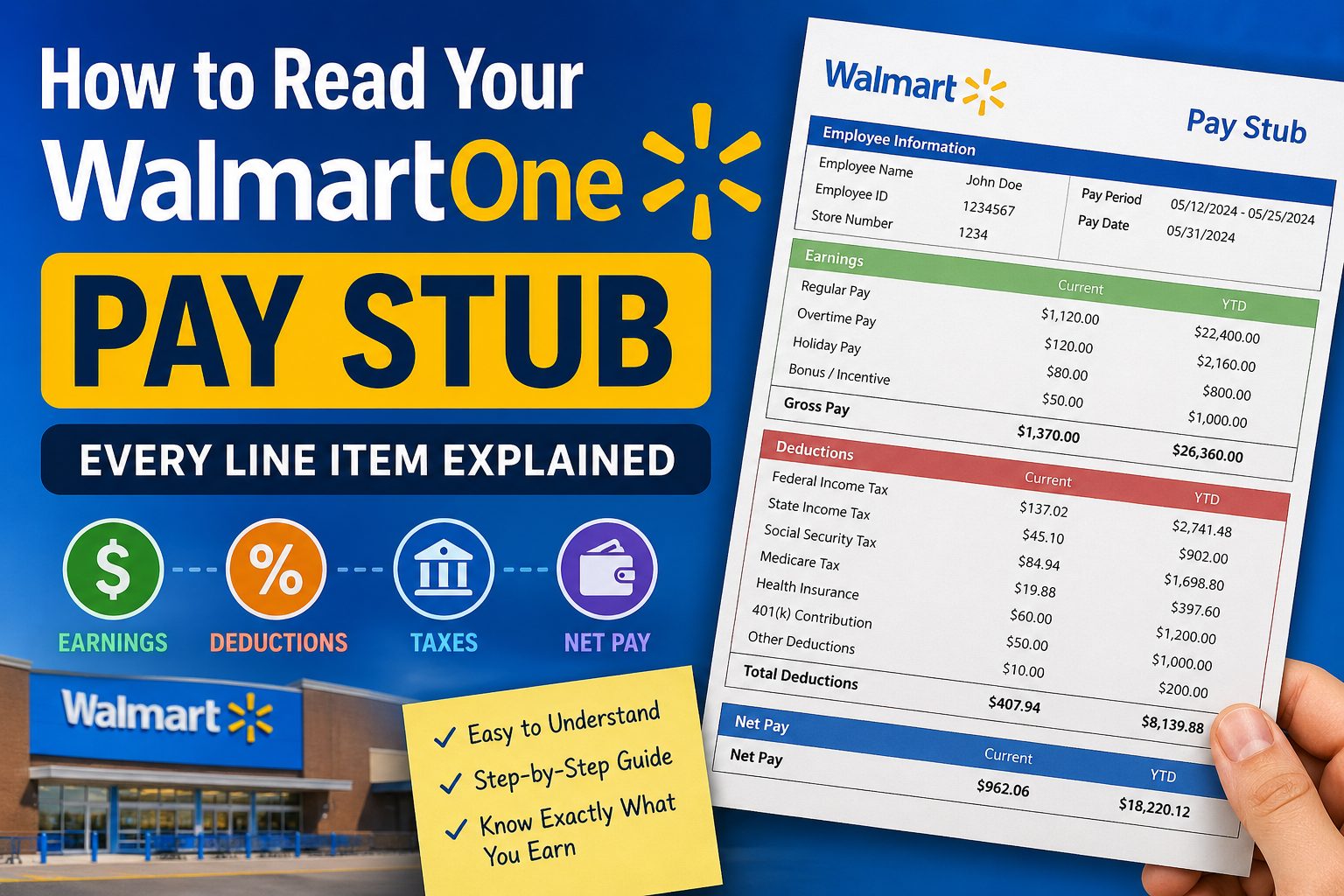
How to Read Your WalmartOne Pay Stub: Every Line Item Explained
A WalmartOne pay stub is a detailed record of your earnings, taxes, and deductions for each pay period. It gives you a clear breakdown of how your total paycheck is calculated, not just the final amount you receive.
Understanding your pay stub is important because it helps you track your income, verify that you are being paid correctly, and see where your money is going through taxes and deductions. Many employees get confused when they see differences between gross pay and net pay or when deductions reduce their take-home amount.
This guide will make everything simple by explaining each section of your Walmart pay stub in easy terms so you can confidently understand your earnings, deductions, and net pay.
2. What Is a WalmartOne Pay Stub?
A pay stub is an official document that shows how much you earned during a specific pay period and how that amount is divided into taxes, benefits, and final take-home pay.
A key difference between a pay stub and a paycheck is that the paycheck is the actual money you receive, while the pay stub is the detailed breakdown of how that money was calculated.
Walmart employees can access their pay stubs through the WalmartOne (OneWalmart) online portal or mobile app. This digital access allows you to view, download, and print your pay history anytime, making it easy to track your earnings and keep financial records.
3. How to Access Your WalmartOne Pay Stub
To view your Walmart pay stub, start by logging into the WalmartOne or OneWalmart employee portal using your username and password. Once logged in, you may be required to complete multi-factor authentication for security purposes.
After signing in, navigate to the “Pay” or “Paystub” section from the main dashboard. Here, you will see a list of your pay periods. Click on any specific date to view your detailed pay stub.
You can easily download or print your pay stub for personal records, tax filing, or financial planning. Most portals also offer a PDF download option for convenience.
If you are unable to access your account, try resetting your password first. If the issue continues, contact Walmart HR or your store manager for assistance, as they can help restore access or guide you through account recovery.
4. Understanding the Structure of Your Pay Stub
A WalmartOne pay stub is divided into clear sections that show how your total earnings are calculated. Each part helps you understand your work hours, earnings, and deductions in detail.
4.1 Employee Information Section
This section includes your basic employment details such as your name, employee ID, and store number. It also shows the pay period (the time frame you worked) and the official pay date when your salary is issued. These details help confirm that the pay stub belongs to you and reflects the correct pay cycle.
4.2 Earnings Section (Gross Pay)
The earnings section shows your total income before any deductions. It includes regular hours worked, overtime pay for extra hours, and any bonuses or incentives you may have earned. You may also see holiday pay or additional earnings depending on your schedule and Walmart policies. This section represents your “gross pay,” not your final take-home amount.
5. Understanding Deductions on Your Pay Stub
Deductions are amounts taken from your gross pay before you receive your final paycheck. These are split into mandatory and voluntary deductions.
5.1 Mandatory Deductions
Mandatory deductions are required by law and apply to almost all employees. These include federal income tax, state income tax (if applicable), Social Security tax, and Medicare tax. These contributions go toward government programs and tax obligations.
5.2 Voluntary Deductions
Voluntary deductions are optional and depend on the benefits you choose. These may include health insurance premiums, retirement savings plans like 401(k), Walmart benefit contributions, or union dues if you are part of a union. These deductions support your long-term financial and health benefits.
6. Net Pay: What You Actually Take Home
Net pay is the final amount you receive after all taxes and deductions are subtracted from your gross pay.
The difference between gross pay and net pay can sometimes be significant because of taxes, insurance, and other contributions. Understanding this difference helps you know exactly where your money goes each pay period.
Your net pay may also vary from one paycheck to another depending on overtime hours, bonuses, benefit changes, or tax adjustments.
7. Year-to-Date (YTD) Totals Explained
Year-to-date (YTD) refers to the total amount you have earned and paid in taxes from the beginning of the year up to the current pay period.
YTD is important because it helps you track your annual income and ensures your tax records are accurate for filing purposes. It also gives you a clear overview of how much you’ve earned and how much has been deducted over time.
Many employees use YTD totals for financial planning, budgeting, and preparing for tax season, making it a key part of understanding your overall earnings.
8. Common Pay Stub Terms Explained
Understanding common payroll terms helps you read your Walmart pay stub more accurately. Gross earnings refer to your total income before any deductions, while net earnings is the final amount you actually take home.
Taxable wages are the portion of your income that is subject to taxes after certain adjustments. Pre-tax deductions (like health insurance or retirement contributions) are taken out before taxes are calculated, while post-tax deductions are taken after taxes have been applied.
You may also see adjustments and reimbursements, which include corrections to previous pay, bonuses, or refunded expenses added back into your earnings.
9. Common Mistakes Employees Make When Reading Pay Stubs
Many employees misread their pay stubs due to a lack of understanding of key sections. One common mistake is ignoring deductions and only focusing on the final paycheck amount.
Another frequent error is confusing gross pay with net pay, which leads to misunderstandings about total earnings. Employees also often forget to check if overtime hours have been calculated correctly.
Additionally, changes in tax rates or deductions may go unnoticed, which can affect take-home pay. Regular review helps avoid these issues and ensures accurate payments.
10. What to Do If You Find an Error
If you notice a mistake on your Walmart pay stub, the first step is to contact Walmart HR or your store management team. They can guide you through the correction process and verify your payroll details.
When reporting an issue, clearly explain the error and provide supporting details such as the pay period, hours worked, or missing amount. This helps speed up the resolution process.
Most payroll issues are reviewed and corrected within one or two pay cycles, depending on the complexity of the error.
11. Tips to Better Understand Your Earnings
To stay on top of your finances, it’s important to regularly review your pay stubs instead of only checking your paycheck amount. This helps you spot errors early and understand your earnings better.
Tracking your hours worked each week can also help you verify overtime and regular pay accuracy. Using budgeting tools or apps can make it easier to manage your income and expenses.
Finally, always keep copies of your pay stubs for tax purposes and long-term financial records.
12. Conclusion
Understanding your Walmart pay stub is essential for managing your income, tracking deductions, and ensuring you are being paid correctly. Each section of the pay stub provides valuable insight into how your earnings are calculated.
By regularly reviewing your pay stubs, you can avoid errors, plan your finances better, and stay informed about your income.
In the long run, developing this habit improves your financial awareness and helps you take full control of your earnings and budgeting decisions.